ADULT SESSIONS
What is Craniosacral Therapy?
Craniosacral therapy, ( CST), stems from Cranial Osteopathy and works on the craniosacral system – the fluids and membranes that surround the brain and spinal cord as well as the entire nervous system. It is a hands on whole person approach to wellness that can successfully treat muscular pain, shock, fatigue, stress, anxiety and depression as well as colic and reflux in babies. Craniosacral therapy is ideal for all stages of life including pregnancy. Treatments can be used as a health maintenance programme or to benefit acute conditions.
Dr William Garner Sutherland (B.1873) one of the early Osteopaths who discovered the Craniosacral rhythms within the body wrote,“ within the cerebrospinal fluid there is an invisible element that I refer to as the Breath of Life….. is it really necessary to know what makes the fluid move? Visualize a potency, an intelligent potency, that is more intelligent than your own human mentality.”
Whether online or in person, clients speak of a rekindling of their innate spark; of renewed purpose, vitality and joy.
Who comes for Craniosacral Therapy and what are the benefits?
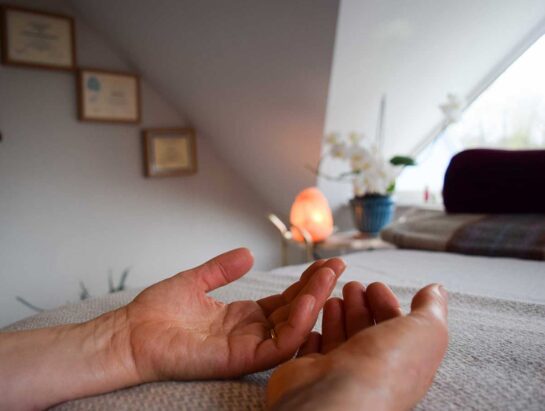
Craniosacral body work offers an experience of safety, stillness and calm that gently recalibrates the nervous system. Some clients come with clear physical issues, a tight neck, frozen shoulder, digestive concerns, cluster headaches, hypertension or symptoms post-concussion . Others may wish to optimize their fertility, reduce anxiety attacks or improve sleep. Craniosacral sessions are also ideal for healthy people seeking to unwind and re-centre.
At the time of booking I send out a case history which we evaluate at the first meeting. On request we may consider your Nine Star Ki birthday numbers. If you would like a full chart there are many aspects that can be explored under the guidance of Shiatsu and Nine-star Ki Expert John Lewis. ( See poster below).
The story of your birth and time in Utero along with your Nine Star Ki numbers helps build a picture of your innate gifts and life purpose as well as identifying ways you may feel held back.
Being with these very early themes with curiosity brings unexpected insights.
“Go back and take care of yourself. Your body needs you, your feelings need you, your perceptions need you. Your suffering needs you to acknowledge it. Go home and be there for all these things.”
~ Thich Nhat Hanh, author of You Are Here
Our whole culture has taught us to strive for the next thing and the next thing. The greatest teachers, song writers and poets remind us that the answers are blowing in the wind, the wounded cracks are where the light gets in, the still restful moments where nothing may seem to be happening may be the most restorative.
“Stillness is vital to the world of the soul…The fragments of your life will have time to unify, and the places where your soul-shelter is wounded or broken will have time to knit and heal. You will be able to return to yourself. In this stillness, you will engage your soul.” John O’Donohue
Picture from September 1994 our wedding with John O Donahue
- Pregnancy related ailments
- Reproductive Problems
- Back pain
- Joint pain
- Sciatica
- Headaches/Migraine
- Digestive Problems/IBS
- Sports injuries
- Neck/Shoulder pain
- ArthritisME/Chronic Fatigue Syndrome
- Sleep Problems
- Anxiety
- Panic attacks
- Stress, Trauma and Depression
- Colic/Reflux in babies
- Pregnancy related ailments
- Reproductive Problems
- Back pain
- Joint pain
- Sciatica
- Headaches/Migraine
- Digestive Problems/IBS
- Sports injuries
- Neck/Shoulder pain
- ArthritisME/Chronic Fatigue Syndrome
- Sleep Problems
- Anxiety
- Panic attacks
- Stress, Trauma and Depression
For the low waged I am willing to discuss concessions. Deciding to have a series of session and then review can be the most helpful approach. I also work in conjunction with the West Cork Beacon.
Craniosacral therapy supports recovery after:
- Emergency or planned Caesarean births
- Birth trauma or shock
- Separation at birth
- Medical interventions
- Feelings of grief, loss, or disempowerment
.